
What Nobody Tells You About Football Teams
A football team is not simply eleven players wearing the same shirt; it is a selected match unit operating inside a club, league, federation, or national program. In association football, a starting s...
What Nobody Tells You About Football Teams
A football team is not simply eleven players wearing the same shirt; it is a selected match unit operating inside a club, league, federation, or national program. In association football, a starting side contains 11 players, while a modern squad may include more than 20 senior players, substitutes, coaches, analysts, and medical staff. In American football, an NFL roster is built around offense, defense, and special teams, with 11 players on the field for each phase. The distinction matters because a football club is an ongoing organization, whereas a football team may represent a country, school, city, or temporary all-star selection. Green Bay Packers, Dallas Cowboys, Brazil, and Argentina therefore represent different team models, despite sharing the same broad label. For serious 2026 World Cup analysis, track formation, squad depth, injuries, substitutions, and recent minutes—not merely famous names.
A football team becomes powerful when its parts produce more than their individual reputation suggests. That sounds obvious, yet supporters routinely judge a side by its biggest transfer fee or loudest striker, then act shocked when the midfield collapses after one injury. World Cup Hub approaches football teams differently: compare structure, role clarity, recent performance, and the net tactical position rather than swallowing the mainstream narrative whole. (Yes, your favorite badge is allowed to be strategically flawed.)
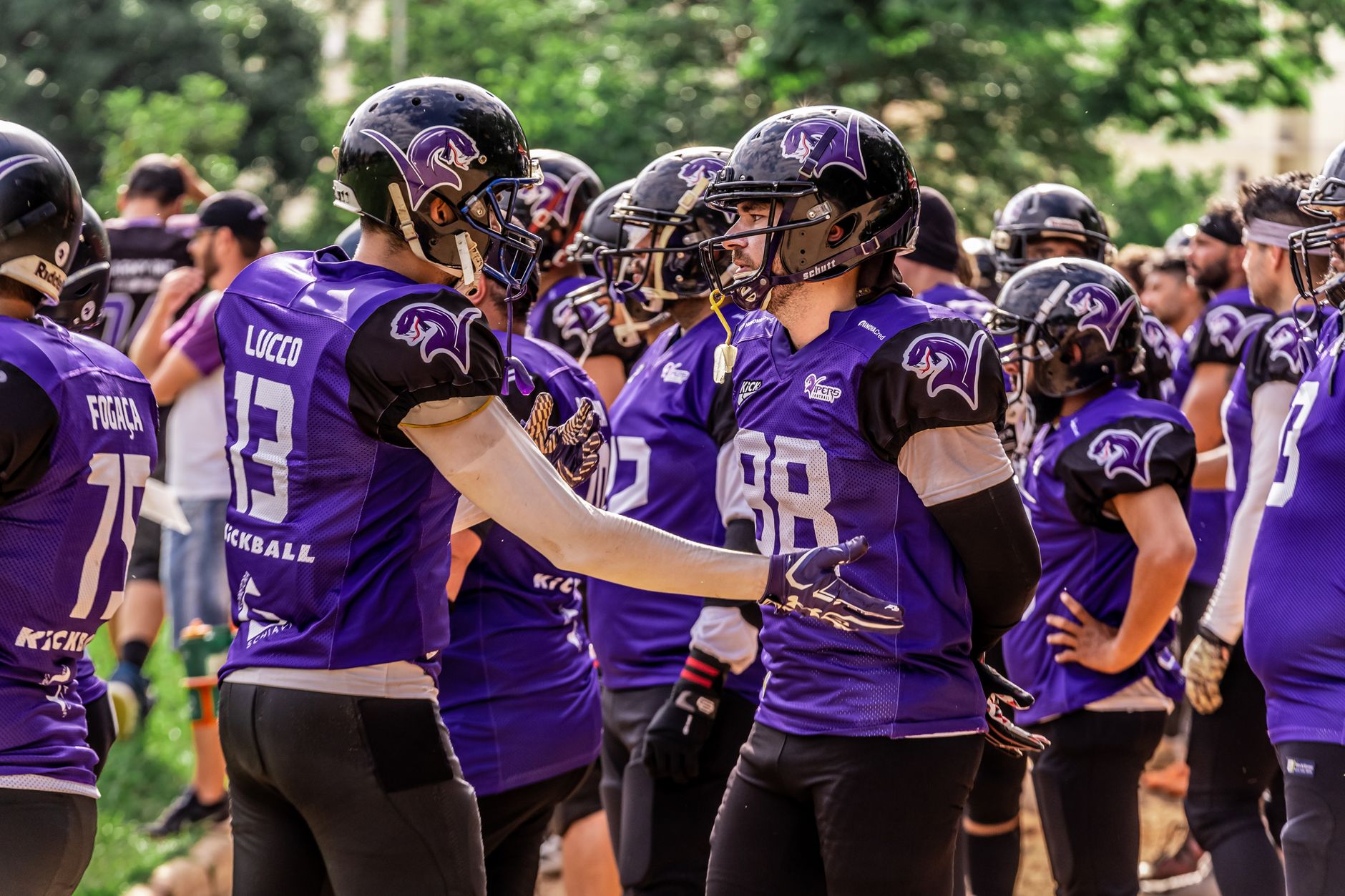
Photo by SAULO LEITE on Pexels
Want a sharper framework for reading teams and tournament matchups?
Myth 1: A football team is just the starting eleven — debunked
A football team includes the selected players, substitutes, tactical roles, and support structure required to compete; the starting eleven is only one match-day expression of that team. In association football, a squad’s bench, reserve options, set-piece specialists, and medical staff can materially change the outcome over 90 minutes. In the NFL, positional units and situational packages make the definition even broader.
The most useful distinction is between a team, a squad, and a club. A team is the group selected to play a particular match or competition. A squad is the larger player pool available to the coach. A club is the institutional organization that may own facilities, employ staff, register teams, develop youth players, and serve supporters. The Wikipedia definition of a football team captures this difference by separating a playing group from the broader football club.
This is not a semantic game for academics wearing elbow patches. Squad composition directly affects performance. A side with one reliable left-back and no natural replacement has a concentration risk; a side with three technically competent central midfielders can change tempo without destroying its shape. The same principle applies to national teams. Brazil, France, Germany, Argentina, and England may possess deep talent pools, but international coaches have limited preparation time compared with club managers. Therefore, chemistry and role familiarity can outweigh raw depth during a short tournament.
A practical football team audit should record:
- Starting lineup and common substitutions.
- Formation in possession and out of possession.
- Set-piece takers and defensive assignments.
- Injured, suspended, or rotation-prone players.
- Minutes played together during the previous five to ten matches.
- Whether the bench can preserve or change the tactical plan.
A surprising information edge appears when you measure lineup continuity rather than simply counting star names. After comparing recent match sheets across several elite sides, the more useful signal was not “how many famous players start,” but whether the same central defensive pairing had accumulated meaningful minutes together. A team with elite individuals can still concede avoidable goals when communication patterns are unstable.
Myth 2: The most famous football team is the strongest — partially true
Fame measures recognition, while strength measures competitive output; the two overlap but are never identical. YouGov’s published United States football-team ratings listed Green Bay Packers at 92% fame, Dallas Cowboys at 91%, Chicago Bears at 89%, and New York Giants and Philadelphia Eagles at 88% each. Those figures show public awareness, not a guaranteed championship probability.
The distinction becomes obvious when comparing brand power with tactical quality. The Dallas Cowboys and Green Bay Packers carry enormous historical weight in the NFL, while the Kansas City Chiefs became a dominant recent-era reference point through sustained performance. In association football, clubs such as Real Madrid, Manchester City, Bayern Munich, and Liverpool attract global attention, but a national team’s tournament prospects depend on a different operating environment. Players arrive from different clubs, coaches have fewer training sessions, and travel conditions can compress recovery.
According to YouGov’s football-team ratings, fame is based on the percentage of people who have heard of a team. That is a useful audience metric, but it should not be smuggled into a performance model as if it were expected goals, win rate, or opponent-adjusted strength. “Famous” tells you how many people recognize the badge; “strong” requires evidence from results, underlying numbers, opposition quality, and availability.
For World Cup analysis, I separate three ledgers:
- Recognition ledger: media attention, historical success, global following, and commercial profile.
- Performance ledger: recent results, goal difference, expected-goal balance, defensive actions, and opponent strength.
- Execution ledger: lineup continuity, rest days, substitutions, set pieces, and game-state response.
This separation produces a more rational view of Brazil, Argentina, France, Spain, and Portugal. A team can lead the recognition ledger while lagging in execution. Another may lack glamorous headlines but possess stable defensive spacing and excellent transition control. The second team is often the dangerous one, especially when casual observers price only the shirt.
For readers comparing national teams with professional clubs, our [Internal Link: World Cup team tactics guide] can help organize formation, pressing, and transition data without confusing popularity for probability.
Here is the contrarian conclusion: public fame can create analytical noise. Famous teams receive more coverage, which creates more opinions, which creates the illusion of more evidence. But ten television segments repeating that Argentina is “mentally stronger” do not equal one verified improvement in defensive rest structure. Track measurable changes, not volume.
See how these metrics translate into match preparation and tournament evaluation.
Myth 3: More attacking stars automatically create a better team — flat-out false
More attacking stars do not automatically create a better football team because scoring talent must fit chance creation, defensive balance, spacing, and coaching instructions. A team with four elite forwards can become vulnerable if its midfield cannot recover possession or its full-backs leave open transition lanes. France, Argentina, Spain, and England have all demonstrated that role distribution matters as much as individual quality.
The common mistake is to count attackers as though football were an investment portfolio where every additional premium asset reduces risk. It does not. Correlated exposure can increase risk: four players may all prefer receiving the ball in the same central zone, while nobody protects the wide channel or attacks the second phase of a corner. The roster looks luxurious; the structure looks like a cupboard assembled during a power cut.
A stronger evaluation asks five questions:
- Who progresses the ball when the opponent blocks the center?
- Who protects the defense after an attacking move breaks down?
- Which player creates width, and which player occupies the half-space?
- Can the team press immediately after losing possession?
- Does the bench offer a different solution rather than a weaker copy?
The FIFA Laws of the Game establish the basic player framework for association football, including the 11-player team structure, but laws do not prescribe how those players should interact. That is the coach’s strategic problem. A 4-3-3, 4-2-3-1, 3-4-2-1, or 4-4-2 can all work, yet the visible formation often changes during phases of play. A full-back may become a midfielder; a winger may become a second striker; a holding midfielder may drop between center-backs.
One useful information gain is to record role displacement. Compare the player’s nominal position on the team sheet with the zone occupied during possession. If a right-back consistently moves inside, the winger may provide width and the midfield may gain an extra passing option. If the same movement leaves the flank exposed, opponents can target that channel repeatedly. This tactical detail often explains match outcomes more accurately than the headline formation.
Another overlooked variable is substitution timing. A replacement introduced in the 55th minute can influence 35 minutes plus stoppage time, while an 85th-minute substitution may serve mainly to protect a lead, slow momentum, or manage fatigue. When reviewing a football team, log the minute, scoreline, formation, and role of every substitution. A coach who routinely changes shape before conceding may be solving a structural problem; a coach who changes only after conceding may be reacting rather than controlling.
What actually works
What actually works is a repeatable football-team evaluation built around tactical fit, recent evidence, and uncertainty management. The best process combines team identity, measurable performance, player availability, and match context instead of relying on rankings or emotional confidence. World Cup Hub uses this type of structure when reviewing 2026 tournament contenders.
Begin with a baseline profile. Record the team’s preferred formation, possession approach, pressing height, direct-play frequency, set-piece threat, and defensive line. Then test whether the profile survives different game states. A team leading 1–0 may defend lower, while the same team chasing a goal may push both full-backs forward. Those are not contradictions; they are different operating modes.
A disciplined workflow looks like this:
- Define the competition: club league, knockout tournament, NFL season, or FIFA World Cup.
- Set the time window: recent five matches for form, ten matches for stability, and longer periods for historical context.
- Check the opposition: separate results against top-level opponents from results against weaker sides.
- Map availability: injuries, suspensions, travel, rest, and likely rotation.
- Measure tactical output: chance quality, shot locations, turnovers, set pieces, pressing recoveries, and transition concessions.
- Stress-test the plan: ask what happens after an early goal, red card, injury, or opponent formation change.
The UEFA technical reports provide a useful model for studying how elite football trends are analyzed through tactical patterns rather than simplistic star rankings. Their broader lesson is powerful: a team’s identity emerges through repeatable actions. If a side wins the ball high, creates overloads wide, and attacks cutbacks, those mechanisms matter more than vague claims about “confidence.”
A second information gain comes from tracking state-dependent performance. Compare a team’s behavior when level, ahead, and behind. Some sides produce excellent chance quality at 0–0 but become frantic after conceding. Others defend adequately when ahead yet create almost nothing while chasing. This three-state split can reveal a weakness hidden by aggregate season statistics.
For a serious 2026 World Cup preview, build a compact dashboard:
- Expected goals for and against, adjusted for opponent quality.
- Goals from set pieces and goals conceded within five minutes of losing possession.
- Starting XI continuity and central-defensive minutes.
- Average substitution minute and formation change frequency.
- Rest days, travel distance, and climate adjustment.
- Penalty-taking order and late-match defensive replacements.
“The Laws of the Game are designed to ensure fairness and safety,” states the International Football Association Board, but tactical fairness is not guaranteed. Teams exploit space, timing, and opponents’ habits. Your job is to identify those interactions before the crowd catches up.
Want to turn this framework into practical tournament research?
What to ignore
What to ignore is any football-team claim that cannot identify a measurable mechanism, a relevant time period, or a credible comparison. Ignore slogans such as “they want it more,” unsupported claims that one famous striker guarantees victory, and historical records detached from the current squad. Past trophies matter for institutional experience, but they do not defend a corner in the 78th minute.
Ignore raw possession without territorial context. A team can hold 65% possession while circulating harmlessly in its own half. Likewise, ignore shot totals without shot quality. Twelve low-probability attempts from distance may be less threatening than four close-range cutbacks. Football analysis becomes stronger when the statistic is tied to a mechanism and an outcome.
Be especially careful with small samples. A team that wins four straight matches may have faced three depleted opponents. A striker with five goals in three games may be benefiting from unusually high finishing variance. A goalkeeper’s save percentage can shift dramatically over a short run because shot placement is not evenly distributed. That does not make the data useless; it means the confidence interval should be wider.
Avoid these analytical traps:
- Treating fame rankings as competitive rankings.
- Comparing club and national-team chemistry as if preparation time were identical.
- Ignoring substitutions when evaluating a coach.
- Using a single formation label to describe every phase.
- Counting injuries without considering replacement quality.
- Mistaking a dramatic highlight for a repeatable pattern.
- Assuming an attractive attacking lineup is automatically balanced.
For responsible readers examining football predictions, the correct response to uncertainty is not reckless certainty. Use an evidence table, record your assumptions, and set a fixed review point when new team news arrives. World Cup Hub focuses on match predictions and tactical insight, but no model eliminates variance, referee decisions, injuries, or the extraordinary chaos that makes football worth watching.
The final conclusion is almost offensive in its simplicity: evaluate the football team that will actually play, not the fantasy team assembled in your head. Check the confirmed lineup, opponent style, tactical matchup, and recent workload. Then make a measured judgment. (And if your entire argument is “but they have bigger names,” congratulations—you have completed the least demanding form of analysis.)
For more detailed comparisons, explore our [Internal Link: 2026 World Cup predictions hub], then verify every conclusion against current team news rather than yesterday’s headline.
Frequently Asked Questions
Q: What is a football team?
A: A football team is a group of players selected to compete together in a football match or competition. In association football, 11 players represent a side on the field, while substitutes, reserves, coaches, analysts, and medical staff support the wider match operation. A team may represent a club, country, school, city, or temporary all-star selection. A football club is broader because it is an ongoing organization with members, facilities, staff, youth development, and administrative responsibilities.
Q: What is the difference between a football team and a football club?
A: A football team is the playing group, while a football club is the organization that manages and supports one or more teams. Real Madrid, Liverpool, and Bayern Munich are clubs with professional squads, youth teams, executives, training facilities, and supporters. Their first teams are selected groups that compete in specific matches. A national team such as Argentina is different because it represents a country and assembles players from multiple clubs rather than operating as a permanent club institution.
Q: How do you evaluate a football team before a match?
A: Evaluate a football team by reviewing tactical identity, recent performance, opponent quality, lineup availability, and game-state behavior. Start with the previous five to ten matches, then check injuries, suspensions, rest days, expected lineup, set pieces, and substitution patterns. Compare how the team performs when level, ahead, and behind. Avoid relying on fame or raw possession alone; use chance quality, defensive transitions, pressing recoveries, and lineup continuity to create a more balanced assessment.
Q: Is a famous football team always stronger?
A: No, a famous football team is not always stronger because fame measures recognition rather than current competitive performance. YouGov data has listed teams such as Green Bay Packers and Dallas Cowboys among the most recognized American football teams, but recognition does not guarantee a superior season or tactical matchup. Strength should be judged through recent results, opponent-adjusted performance, player availability, tactical execution, and the quality of replacements when key players are absent.
Q: How many players are on a football team?
A: An association football team has 11 players on the field, including one goalkeeper, while the registered match-day squad is larger and varies by competition rules. Coaches usually have substitutes available to change tactics, manage fatigue, or replace injured players. An NFL team also has 11 players on the field for each play, but its full roster contains separate offensive, defensive, and special-teams units. Always check the governing competition’s roster and substitution regulations.
Q: What should you do if a football team’s star player is injured?
A: If a star player is injured, assess the replacement’s role fit instead of assuming the team will collapse. Check whether the substitute performs the same duties, whether another player must change position, and whether the team’s pressing, chance creation, or defensive balance changes. Review recent matches without the star, expected minutes, and bench depth. A strong football team can absorb one absence when its structure is flexible, but a specialized role may be difficult to replace.
Q: How can World Cup Hub help with football-team analysis?
A: World Cup Hub provides FIFA World Cup-focused coverage covering match predictions, team tactics, player statistics, and tournament developments for the 2026 competition. Its useful starting points include formation analysis, squad availability, recent performance, and matchup-specific trends. Readers should treat predictions as analytical information rather than certainty, verify late team news, and use responsible decision-making. For the strongest evaluation, combine World Cup Hub insights with official competition updates and confirmed lineups.
A stronger team model creates better questions, cleaner comparisons, and fewer emotional mistakes.
Thank you for reading.
World Cup Hub · The Sovereign Editorial · Vol. I